Progressive Rock Artist seeks Audience

Author: colin (Page 11 of 39)

Cakewalk is dead; Long Live SONAR

My Digital Audio Workstation (DAW) of choice is Cakewalk’s SONAR. In 2017, Cakewalk (formerly Twelve Tone Systems) were celebrating their 30th year in business. Over the years, the “Cakewalk” MIDI sequencer evolved to support digital audio and matured to became a very capable music production environment. Eventually the company took the name of its flagship sequencer, and the DAW continued under the “SONAR” name.

image

I first encountered Cakewalk Pro Audio in 1994 when my wife-to-be (long story) sent me a copy. I think it was version 5. It very quickly replaced Passport’s Master Tracks Pro * as my studio workhorse, especially after digital audio recording features were added. I’ve been a loyal, paid-up user ever since.

In 2008 the company was effectively acquired by Roland, which in 2013 subsequently sold their shares to Gibson.

In November 2017, Gibson effectively killed the company by stopping ongoing development and reducing the staff to the minimum required to keep the servers running.

We can guess that Gibson may have tried to find another owner for the company, and failed; or perhaps just decided that it was better to write it off as a loss for this financial year.

Either way, we’re not going to see any updates to the SONAR product in the foreseeable future, despite the fantasies being spun out by some on the user forum.

The company website still exists, and you can find links to “Buy SONAR” but they all eventually lead to the cease-of-business announcement and the statement that new purchases are no longer possible. Documentation and downloads of historical updates and resources are, for the moment, still available. You’d have to be an idiot to think that this will always be so, however.

So where does that leave folks like me?

  • Switch to another brand of DAW, immediately
  • Stay with SONAR for the time being

I think I’m totally in the second group. If I were to switch, it would be to PreSonus Studio One, because I already own it (I use it for the excellent Project page for mastering).

Negatives:

  • If you’re not happy with 2017.10, well, you’re out of luck waiting for changes.
  • A re-install will require access to online authentication servers (at least until a promised work-around is made available).
  • If you find an existing bug that doesn’t have a work-around, you’re out of luck getting it addressed.

Positives:

  • It’s not like SONAR is going to suddenly stop working;
  • No new features means no new bugs;
  • As far as we know, there aren’t any existing show-stopper bugs without workarounds;
  • Total mastery of the software is possible; current techniques won’t become obsolete;
  • We can finally create an up-to-date knowledge base of tips, tricks, and workarounds.

I don’t regret the time or money I’ve invested in Cakewalk SONAR up until this point. To throw up my hands and abandon it? That would be throwing away that investment. So for now, call me a happy SONAR user.

Onward, and create!

* Oh my goodness, they are still a Thing.
The VAXMIDI by Infinite Response

In 2015 a Kickstarter was created for a project called “VaxMIDI” – a MIDI keyboard controller with attractive features, including polyphonic note pressure detection or “aftertouch”, a feature that traditionally has been difficult and expensive to produce, and/or protected by patents.

The second really interesting thing about this project is that it would be shipped in kitset form, to keep costs to a minimum.

The folks behind this project were reputable (read more about Infinite Response and the VAX77 keyboard). Strictly speaking, I did not need another keyboard controller in my studio, but as an engineer/musician, the project intrigued me.

I backed the project at the top tier, in for a 8-octave unit.

After the project reached its funding goal, we had to wait for the kit to be developed and manufactured before eventually receiving our kits. I was in the second wave of beta testers, and early 2017 I came home to a large box on the front doorstep.

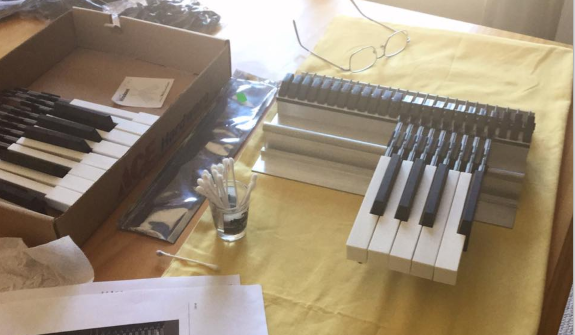
I took over the dining room table for several months, assembling and testing each of the four 2-octave units.

image  image

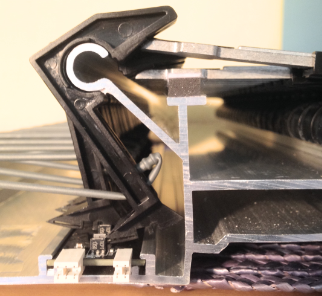
Each base is an extruded aluminum section with a complicated cross section, supplying rails for the keys to swivel and rest on, and a clever mechanism of hammers that are flipped up by each key, and pass a slotted blade through an optical detector.

The aftertouch sensor is a long slot that widens as the blade is pulled through the sensor as the key is depressed more firmly.

There is quite a few places where this can go wrong: The sensor strip (of 22 detectors) can be misaligned; the distance between the hammer rail and the sensor base can be too high or too low; the felt on which the key steel rests can be too high… all these things have to be just right in order to position the slots correctly for the note and pressure detection to work correctly.

Additionally, there are challenges in assembling each base into the chassis and connecting the system circuit boards so that it stays together in a robust and stable configuration. Also, there are bugs in the firmware such that spurious patch changes were being emitted during testing.

Bottom line: My assembled unit is back in its big brown box, in my garage, until such time as we get some updates on how to address these issues. It’s looking more and more as though they will not be forthcoming. I think the company has long burnt through their Kickstarter funding, and combined with family health issues, I don’t foresee this project coming to a good conclusion.

That’s sad, because it shows a lot of promise. Technically, I think it can work, but it is really sensitive to manufacturing tolerances, and the skill and ability of the assembly technician (i.e. me) to overcome them only goes so far.

Re-releases and Resets

Steel Tree 2.0

Okay, the biggest news is that I have created a 2.0 version of the Fruit of the Steel Tree album, as a digital release on BandCamp. The songs are also available to stream on this site – I’ve updated the Production Notes and you can read about the changes there.

Album #2

Album #2 is taking longer than expected, due to reasons that aren’t worth discussing. I have one track 100% completed, and I’m working on a couple of others that have been around for years but have never been finished. I have another long piece in demo form, 70% of it anyway. And finally, another large piece that is in the process of being written and I’m feeling very challenged by it both compositionally and thematically and it’s been hard to make progress on it.

Bottom line: I’m not giving up. There’s too much here that I value to throw in the bin. In order to get Steel Tree finished, I had to get serious and “reset” my activity and treated it like a project, requiring management and discipline.

I need another reset, to not despair of how long things are taking and instead satisfy myself with continual, gradual progress. And also, I’ll blog about it.

It’s been some time

What’s new, you may ask?

  • I’ve been a beta-tester for Infinite Response’s new “kitset” controller keyboard, the VaxMIDI. More on that later, perhaps;  
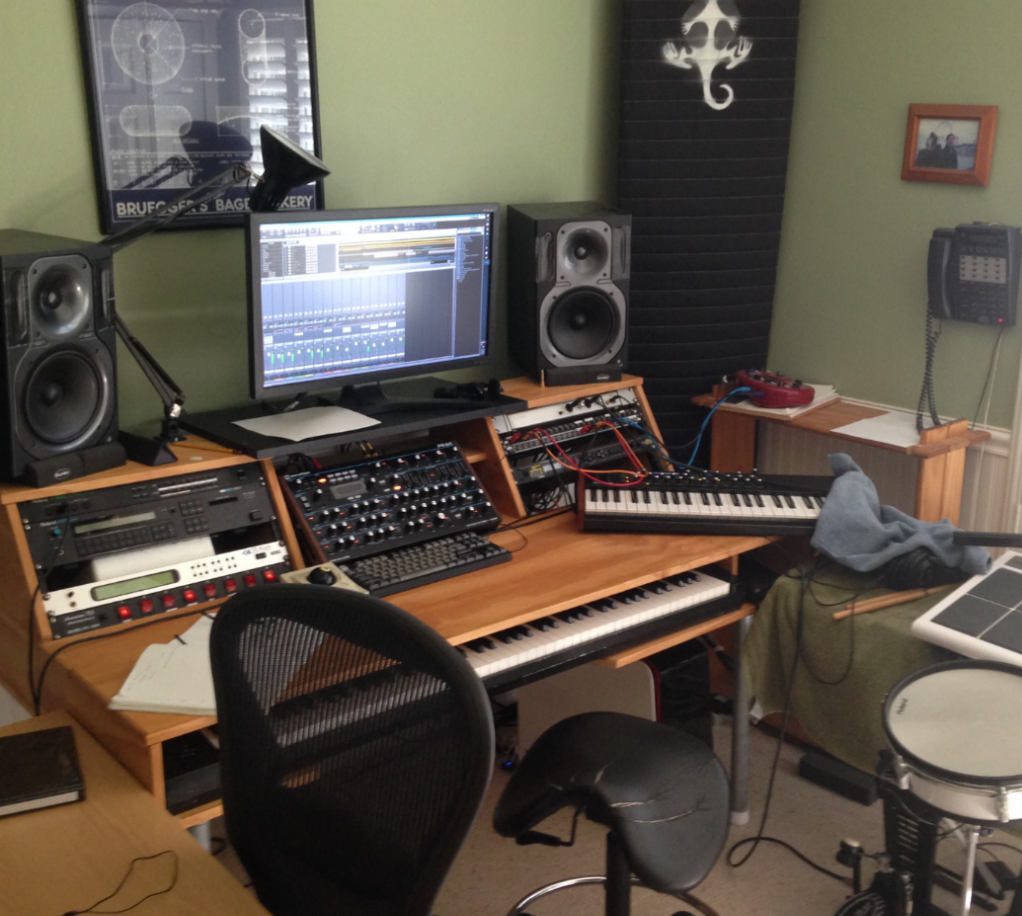
  • I’ve acquired some new non-kitset hardware: A Mopho SE from Dave Smith Instruments, and the new PEAK desktop synth module from Novation.
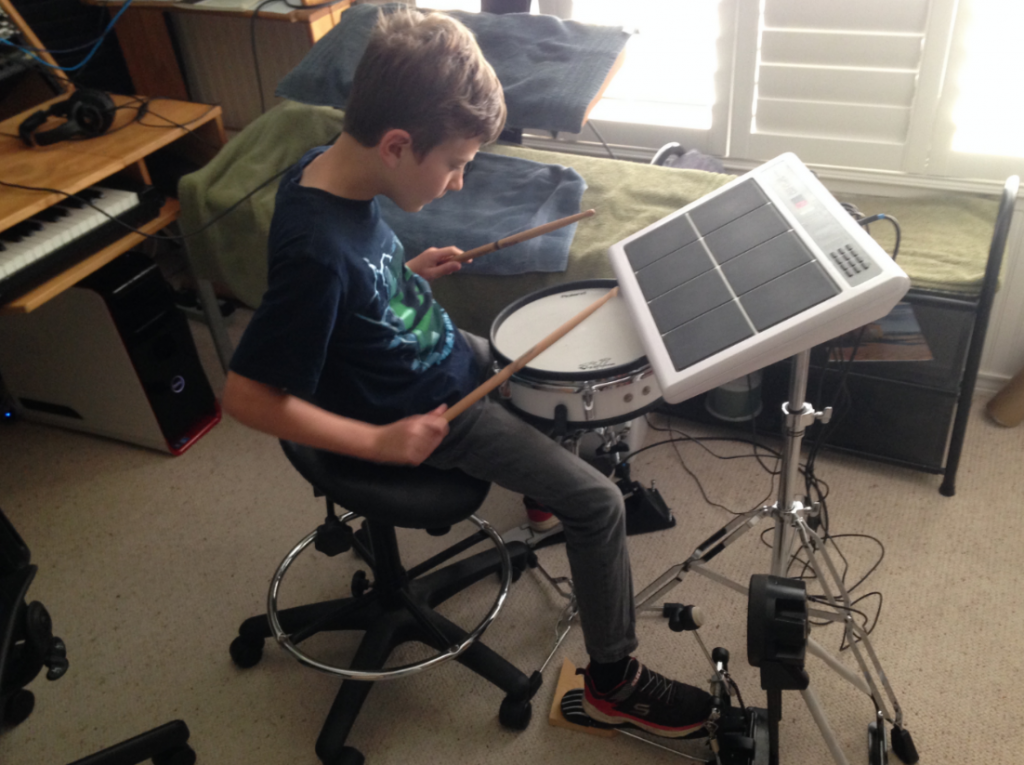
  • I replaced the foam cone in my PD-120 (bought off e-bay) and connected it to the SPD-20 along with the kick and hhat pedals. Next steps: program up a nice internal kit on the SPD-20, then assign MIDI notes and start hitting Toontrack’s Superior Drummer.
Jonah lays down some sick beats

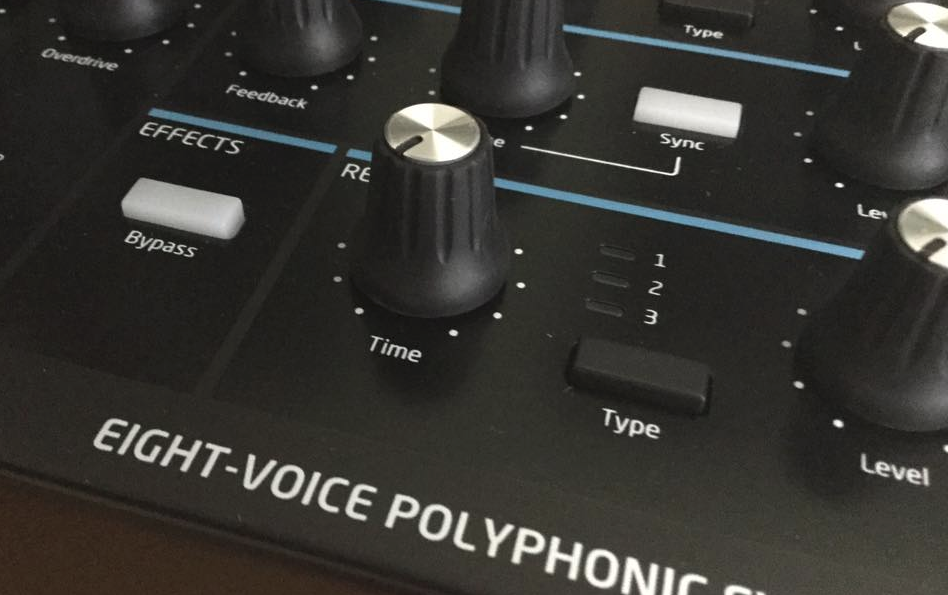
PEAK interest

If I turn that knob, will I get a three day weekend?

The Novation PEAK is like having my Jupiter-6 back. Very yummy. I’m looking forward to working through the complete Synth Secrets book with this one.

« Older posts Newer posts »

© 2026 The Prodigal Sounds

Theme by Anders NorenUp ↑