Progressive Rock Artist seeks Audience

Category: Equipment (Page 4 of 10)

Gibson L6-S Deluxe

Serial# 968739

The annual Marin County Guitar Fair was held in January. This was the second year in a row that we’ve gone along to see what’s on offer. Not with any intention of buying or selling, of course, but just to admire the work of local luthiers and to maybe catch a glimpse of a genuine ’53 blackguard tele, or similar.
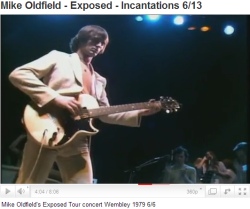
Last year I joked to Lisa that there were only two possible models of guitar that we might find that would put me in a “difficult position”, one of which is the Gibson ES-Artist, as played by Steve Howe on all Asia albums in which he contributes; and a Gibson L6-S Deluxe, as played by this guy shown on the right.

That model of guitar is all over Oldfield’s albums, from Incantations to QE2, and specifically the ’79 live concerts exemplified by the Exposed film and album.

Oldfield’s playing has a particular tone and quality on these albums that I covet, and it was always tempting to think that the guitar was partially responsible. I’ve kind of always wanted one.

Last year I remember seeing a related model, a black L6-S Custom but it didn’t pique my interest at all.

This year, the real thing showed up.
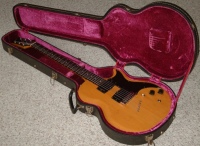
After a couple of seconds careful thought*, it came home with me.

According to Wikipedia, Gibson only made 3500 of these models, from 1975 to 1980. They are not really considered collectable by guitar experts – at least, not currently – and so prices vary. I consider this particular purchase to be good value, while “true collectors” who wet themselves over $30,000 blackguard teles and 50’s Les Pauls probably haven’t even heard of the L6-S, and might think it too much to pay for an old, “unknown” Gibson.

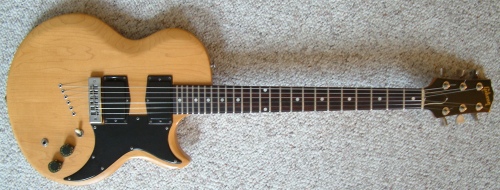
The body shape is somewhat unique. It looks like a classic Les Paul that has been left out in the sun: Thinner and “spread out”. I like to think of it as a cross between a thin Gibson SG and the Les Paul profile. Also unusual is it has 24 frets, with a thin neck joint and body cut-away making runs up the fretboard a breeze.

I think the pickups are designed by Bill Lawrence – they were on the original L6-S but the Deluxe model could be using something different. Either way, I know they are factory-original**, along with the guitar case.

Both the guitar case and guitar smelled rather musty, but after I brought the guitar home, I have been airing the case out in the sun, and I stripped the guitar down and cleaned off all the accumulated gunk from the hardware and rubbed the body down with Murphy’s Oil Soap. Now it has a pleasant, vintage wood aroma.

To celebrate the addition of this first “vintage” instrument to my collection, I spent some time recording some excerpts of my favorite Oldfield tracks with the L6-S.

The first thing I noticed is that this guitar is BRIGHT. Very trebly, not at all Les Paulish at all, despite the humbuckers. Secondly, the guitar is seriously resonant. Play almost  any note on the high E string above the 12th fret and you can hear various harmonics on the other open strings singing along. Also, the pickups are very microphonic, reproducing clicks, and pick noise, and even my cursing at duff notes. I think these factors contribute to the tone of the instrument and do explain some of what you can hear in the Exposed recordings. The “honk” of this guitar is definitely present on the Oldfield albums.

So here’s my attempts:

First Excursion (excerpt)

I don’t have an amplifier, so I couldn’t try and replicate that wonderful sustained feedback on the original version of First Excursion.

 Incantations Part 3 (excerpt)

 QE 2 (excerpt)

These were all recorded with the same settings on the L6-S: bridge pickup with the treble control rolled all the way off.

(*) Actually, I went back the following day and bought it.

(**) Often, owners will swap out the factory-original pickups and put in their favorite brand of humbucker. When considering a vintage guitar purchase, it’s always better to have the original components.

Fender Telecaster

Serial# MZ9547881

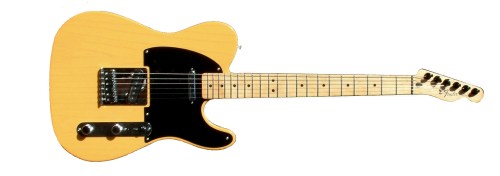
OK, So this year I got a craving for one of these, and I don’t know why. Perhaps it was retroactive craving, because now that I have one, I’m loving it and wouldn’t want to do without it. I’ve used it on every track I’ve worked on since it arrived, bullying its way into the studio and pushing the other electric guitars aside.

I have replaced the tuners with Steinberg Gearless ones, partly because I’ve always wanted to try them, and partly because the stock tuners were probably the weakest component out of the box. Tuning the guitar up didn’t feel as solid and reliable as I felt it should be. Also – the black tuners are sexier than the old chrome ones. 

Cakewalk SONAR 8

Not much to say about this. I’ve been using Cakewalk Windows-based sequencers and audio recorders for 15 years. Upgraded with goodies and new features almost every year, never begrudged the upgrade tax. SONAR 8 is pretty much perfect. Check out the user forum, it’s an excellent resource.

Update: SONAR still exists in 2019, but it has a new owner, and a new name: Cakewalk By Bandlab. And it is FREE. You will not find better value for your money, this is a professional, mature, music production environment.

Cakewalk Dimension Pro

Dimension Pro was Cakewalk’s flagship virtual synthesizer for a few years, at least until Rapture came out*. Dimension LE was bundled with SONAR 7, but I didn’t really use it seriously until the “pro” version was bundled with the SONAR 8 Producer upgrade. It included an impressive sound library, particularly some wonderful string section patches which I’ve started to use.

* Now Rapture LE is bundled with SONAR 8.5. I detect a trend.

Review: K&K ProST Dual Channel preamp

Last post I described my experience setting up my Stick to have bass strings on both sides of the fingerboard. One roadblock is that the Stick uses a stereo output jack to carry each side. This is cool for independent processing of bass and treble registers, but if you’re trying to play both registers as a single bass instrument, you might want to treat the output as a single mono source, without switching cables around.  (Basically, I wanted to mess round with chords without messing around with cords. Heh. I slay me.)

This topic comes up quite a lot on the Stickist.com forums. What equipment to use with the Chapman Stick’s dual channel design? Many people invest a lot of money in capable, sophisticated and expensive processing units, but it seemed to me that I really just needed a simple two-channel active mixing device.

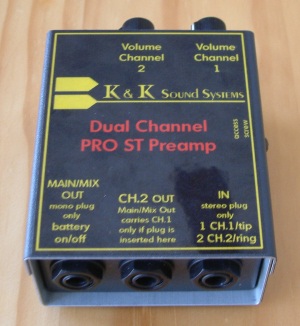
After much searching on the web I found Gollihur Music, and after absorbing the information on Bob’s site, I ordered a K&K Pro-ST Dual Channel Pre-amplifier, for $124. It seemed like the ideal thing from the specs.

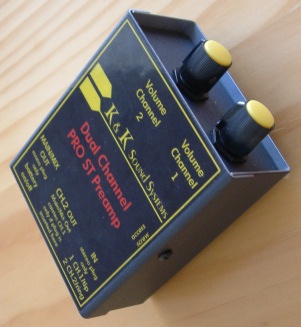
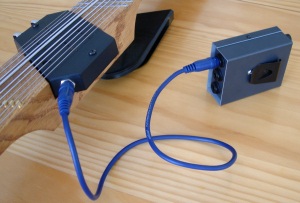
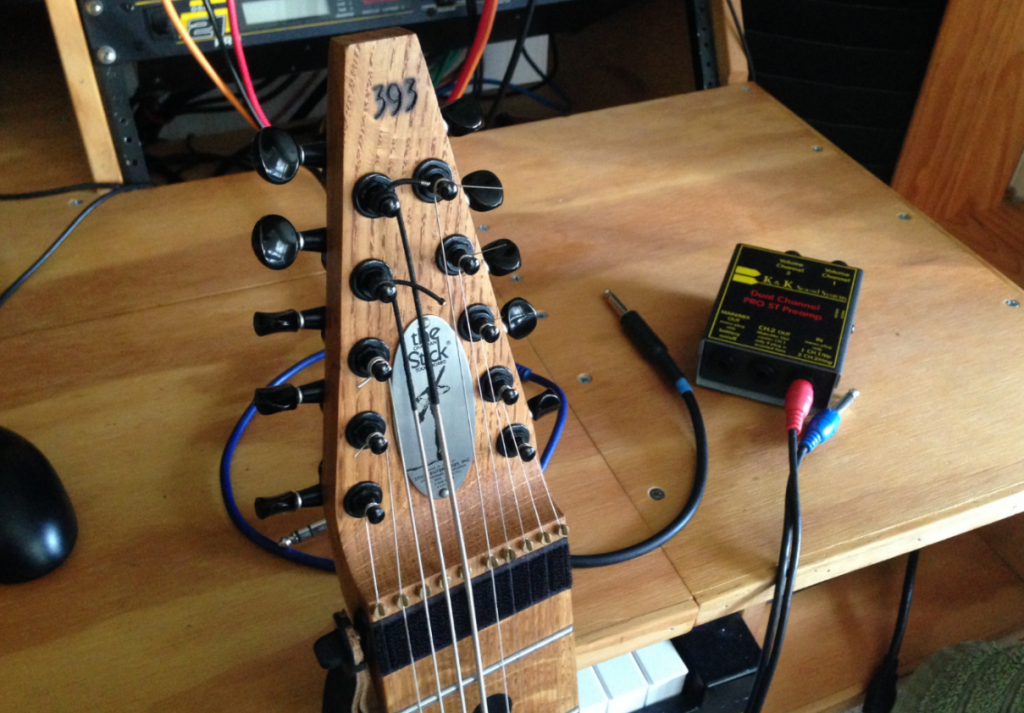
It arrived the other day. It’s a nice, compact black box with two knobs (volume for each channel) and three jacks (stereo input, main mono out, and a second output that splits the output and retains the channel separation. So basically if you want to keep the pre-amp feature but process the two channels independently, you can. This seems like the best of both worlds.

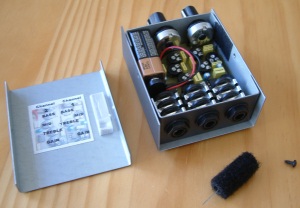
There’s a small screw at the side that you have to remove to take the lid off. This thing is very solidly built, it feels very reliable.

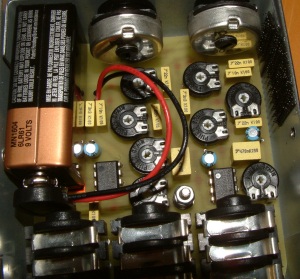
Once the lid is off, you can plug in the required 9-Volt battery, and adjust the channel gain and EQ pots. There is even a little metal “screwdriver” for this purpose, tucked away inside with velcro to keep it from knocking around.

Yes, this device allows you to set the gain and bass/mid/treble for each channel independently. Perfect for my situation, where the treble side of the Stick sounds a bit too trebley, despite the bass strings that are used.

I plugged in the Stick and experimented with adjusting the EQ.

With the volume turned all the way up, it seems as though the default available gain is about 120% unity. 

If you’re looking to amplify a piezo pickup or similar (I have a Dean Markley acoustic pickup I was thinking of using with my Wendler bass, for example) then you can change the amount of gain on each channel using adjustments to the mini-pots. They are set half-way by default.

I ended up knocking back the treble pot a little to even out each side of the Stick. I couldn’t get it perfect – the two registers just sound different, that’s just the way it is, but I could get a definite improvement over the flat response, so it was worth it.

With the stick hanging off my military-style web belt, the preamp’s handy belt clip lets me use a short TRS “patch cord” to direct the Stick’s stereo output to the preamp input. Then my regular “Monster” mono instrument cable takes the preamp output away to my POD, etc, for recording.

Initial tests are very promising.

Still in use, November 2017
« Older posts Newer posts »

© 2026 The Prodigal Sounds

Theme by Anders NorenUp ↑